Popular search terms
  • Biosecurity toolkit
  • Contact us
  • What is biosecurity?
  • Farm Biosecurity Program
  • Plant pest responses
  • Animal disease response
  • Farm profiler
  • Toolkit
  • Subscribe
  • About
    • About the Farm Biosecurity Program
    • Emergency animal disease responses
    • Emergency plant pest responses
  • Essentials
    • Farm inputs
    • Farm outputs
    • Ferals & weeds
      • Wild dog biosecurity
    • People, vehicles & equipment
    • Production practices
    • Train, plan & record
    • Videos
  • Toolkit
    • Gate sign
    • Create your own biosecurity kit
    • Declarations
    • Manuals
    • On-farm biosecurity planning
    • Records
  • Crops
    • Cotton
      • Cotton best management practice
      • Cotton product management
      • Cotton pests
    • Feed mills
    • Fruit & nuts
      • Fruit & nut pests
        • Apple and pear pests
        • Avocado pests
        • Banana pests
        • Cherry pests
        • Citrus pests
        • Mango pests
        • Nut pests
        • Papaya pests
        • Summerfruit pests
      • Fruit & nut product management
    • Grains
      • Grains pests
      • Grains product management
      • Grain storage options
    • Honey bees
      • BeeAware website and newsletter
      • Code of Practice and National Bee Biosecurity Program
      • Honey bee glossary
      • Honey bee product management
      • Honey bee pests
      • Honey bee best management practice
      • Beekeeper advisory – mosquito insecticide control during the 2022 Japanese encephalitis outbreak
    • Nursery & garden
      • Nursery & garden pests
      • Nursery & garden product management
      • Nursery & garden best management practice
    • Onions
      • Onion pest threats
      • Onion pest eradication or control examples
    • Plantation forestry
      • Forestry biosecurity practices
      • Forestry pests
      • Hypothetical exotic bark beetle incursion
      • Plantation forestry quality assurance
    • Potatoes
      • Potato pest threats
      • Potato biosecurity areas
    • Sugarcane
      • Sugarcane best management practice
      • Sugarcane biosecurity essentials
      • Queensland Sugarcane Biosecurity Zones
      • Sugarcane pests and weeds
    • Vegetables
      • Vegetable pests
      • Vegetable product management
    • Viticulture
      • Phylloxera
      • Viticulture pests
      • Viticulture product management
  • Livestock
    • Alpacas
    • Beef cattle
    • Chickens
    • Dairy cattle
    • Ducks
    • Eggs
    • Feed mills
    • Goats
    • Horses
      • Mosquito Management for Horses
    • Lot feeding
    • New and emerging livestock industries
    • Pigs
      • Feeding your pigs
      • Controlling mosquitoes around piggeries
    • Ratites
    • Sheep
    • Zoo animals
  • Get help
    • Animal health and biosecurity extension
      • Property biosecurity management planning
  • News
    • E-newsletter
    • Subscribe to Farm Biosecurity News
  • Stories
  • Videos

Abattoir monitoring to maximise your flock health and value

Print this page
  • Home
  • News
  • Abattoir monitoring to maximise your flock health and value

Abattoir monitoring to maximise your flock health and value

National Sheep Health Monitoring Project

Did you know that sheep producers can gain access to detailed feedback on the health status of their flock? This includes identifying conditions that may not yet be visible on-farm.

The National Sheep Health Monitoring Project (NSHMP) monitors sheep at participating abattoirs across Australia for health conditions that reduce farm profitability. The project was established in 2007 by Animal Health Australia, with support from industry bodies WoolProducers Australia and Sheep Producers Australia.

At nine abattoirs nationally, certified meat inspectors are trained to accurately assess sheep carcasses for the following conditions.

  • Arthritis
  • Bruising
  • Bladder worm
  • Caseous lymphadenitis (‘cheesy gland’)
  • Cirrhosis
  • Dog bites
  • Fever/septicaemia
  • Grass seeds
  • Hydatids
  • Knotty gut
  • Liver fluke
  • Lungworm
  • Nephritis
  • Pneumonia
  • Pleurisy
  • Rib fractures
  • Sarcocystosis
  • Sheep measles
  • Vaccination lesions
  • Johne’s disease (only on request by the consigner)

Many of these conditions show minimal or no signs on-farm yet still reduce productivity throughout the value chain. For example, bladder worm and sheep measles have little to no impact on sheep health but can lead to trimming or condemnation of carcasses and offal at the abattoir.

The NSHMP strengthens two-way communication between farms and abattoirs, giving producers clearer insight into what’s affecting their margins, even when sheep appear healthy. This supports better on‑farm decision-making, and helps reduce wastage, improve productivity, and maximise profitability.

Flock health data at your fingertips

Producers can access their flock health data through Meat and Livestock Australia’s (MLA) myFeedback portal. myFeedback aims to reduce industry losses by presenting carcass and animal health information in a user-friendly format, with resources to support the prevention and management of detected conditions.

This supports:

  • more informed farm management decisions (e.g. vaccination, worming dogs, and pasture management)
  • better sheep health and welfare
  • increased productivity and profitability.

Insights from the 2024-25 report

The NSHMP annual report is a valuable tool for sheep producers to learn about emerging health trends in their region. In 2024-25, the project analysed data from 9.8 million sheep, identifying disease patterns at the national, state and local levels.

The most common conditions recorded were bladder worm and nephritis, accounting for 2.8% and 2.3% of inspected sheep, respectively. Bladder worm has remained the top condition over the last three years. Nephritis, while historically less common, has significantly increased over the past year in inspected sheep.

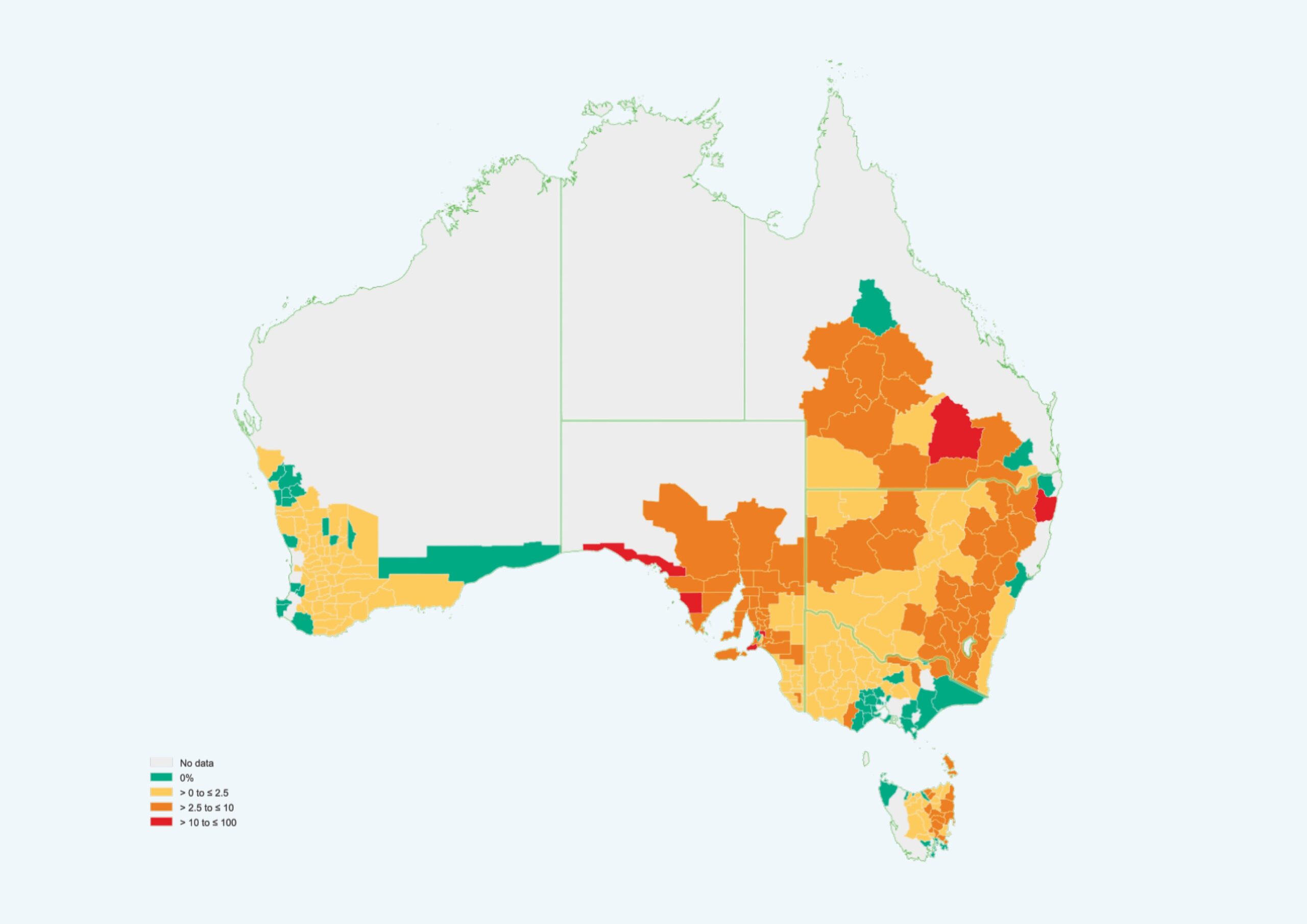
NSHMP map

Percentage of sheep affected by bladder worm in each LGA in 2024-25.

The report also breaks down the top five conditions in each state, helping producers understand what to look out for and supporting proactive on‑farm management. Condition prevalence is mapped at the local government area (LGA) level, allowing producers to compare their own flock health data against broader trends in their area.

Percentage of sheep affected by bladder worm in each LGA in 2024-25

View the 2024-25 NSHMP annual report to explore how sheep health conditions are tracking in your region.

Get involved

If you’re a sheep producer, you can get involved in the NSHMP and start receiving valuable insights into your flock’s health.

To get started:

  1. Consign sheep to a participating abattoir.
  2. Create a myMLA account if you don’t already have one.
  3. Link your myMLA account with your Livestock Production Assurance (LPA) account.
  4. Access your flock health data through myFeedback.

For more information on the NSHMP, visit National Sheep Health Monitoring Project.

Related links

  • Accessing myFeedback | Meat & Livestock Australia
  • NSHMP Annual Reports – Animal Health Australia

Read the latest information on
Foot-and-mouth disease

Read the latest information on
Lumpy skin disease

Read the latest information on
Japanese encephalitis

Subscribe to our newsletter

Farm Biosecurity News

Use our profiler to make your

Biosecurity Toolkit

Latest News
  • 27 February 2026

    Abattoir monitoring to maximise your flock health and value
  • 26 February 2026

    Safely store your veterinary medications and vaccines
  • 26 February 2026

    Biosecurity basics for growers
  • 22 January 2026

    Protecting your farm’s biosecurity when severe weather strikes
  • 22 January 2026

    From paddock to port: biosecurity training for everyone

Emergency Animal Disease Hotline
1800 675 888

Exotic Plant Pest Hotline
1800 084 881

  • Sitemap
  • Copyright
  • Contact us
  • Privacy & Disclaimer
  • Website by Morph Digital