Read the latest information on
Foot-and-mouth disease

Most pests and diseases do not arrive with a warning. They are often introduced unknowingly on boots, tyres, tools or plant material.
With people, vehicles and equipment moving between properties every day, these pathways present an ongoing biosecurity risk.
‘Come clean, go clean’ is a simple, practical approach to help manage this risk. It means ensuring anything entering a property is clean, and anything leaving it is clean as well.
Why this matters
Soil is one of the biggest risk pathways for pests and diseases. Even small amounts can carry fungal spores, insects, weed seeds or plant pathogens.
Tyres, undercarriages, boots and tools are common carriers, particularly when moving between paddocks, properties or regions.
Without regular cleaning, pests and diseases can spread quickly and become established in new areas. Once present, they can be difficult and costly to manage, with impacts on productivity and market access.
What this looks like on farm
Make sure visitors and staff understand and follow the biosecurity measures you have in place. Keeping records of visitors, vehicles and equipment movements can support traceability if an issue arises. Record keeping templates are available to help make this easier.
Setting a clear entry point helps manage how people and vehicles move onto a property. Directing visitors and contractors to a single access point makes it easier to apply hygiene measures. Farm gate signage can help set expectations before people enter.
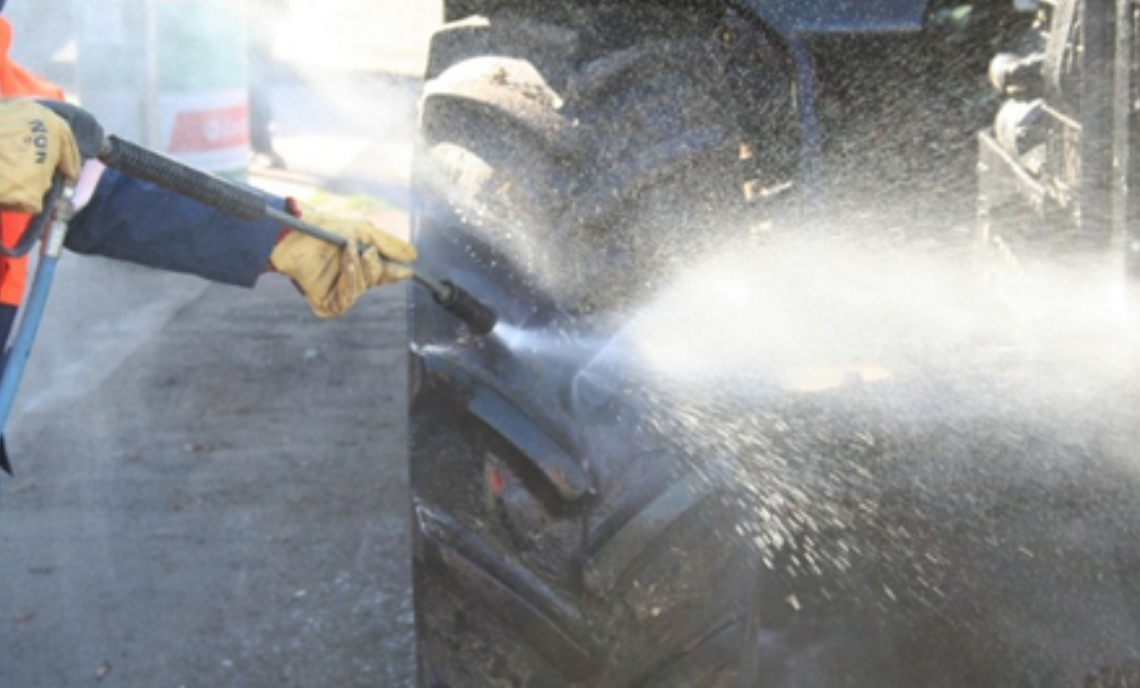
Clean vehicles, equipment and tools before they enter and before they leave a property. This reduces the chance of introducing pests and spreading them elsewhere. A quick guide to vehicle biosecurity outlines simple steps to follow.
Support good hygiene by providing boot cleaning stations or footbaths at entry points and keeping them well maintained. You can make your own footbath using simple materials.
Manage vehicle movement by keeping visitor vehicles out of production areas and using farm vehicles where possible. Where practical, using dedicated gear, boots or clothing for different production areas can also reduce cross-contamination.
Apply it both ways
Come clean, go clean works in both directions.
Before people, equipment or produce leave your property, check that soil and plant material have been removed. This helps prevent pests and diseases from spreading to neighbouring farms and the wider industry.
Try to avoid returning unsold produce or plant material to the property, as it may have been exposed to pests or diseases during handling, transport or storage. If you do, store it separately from other stock to minimise the chance of transferring pests and diseases.
Keep it consistent
These actions are most effective when they are applied every time, not just during high-risk periods.
It only takes a few minutes to ensure that the ” come clean, go clean measures are followed. Keeping movements clean helps protect your property, your neighbours and the wider industry.
More biosecurity resources