Read the latest information on
Foot-and-mouth disease

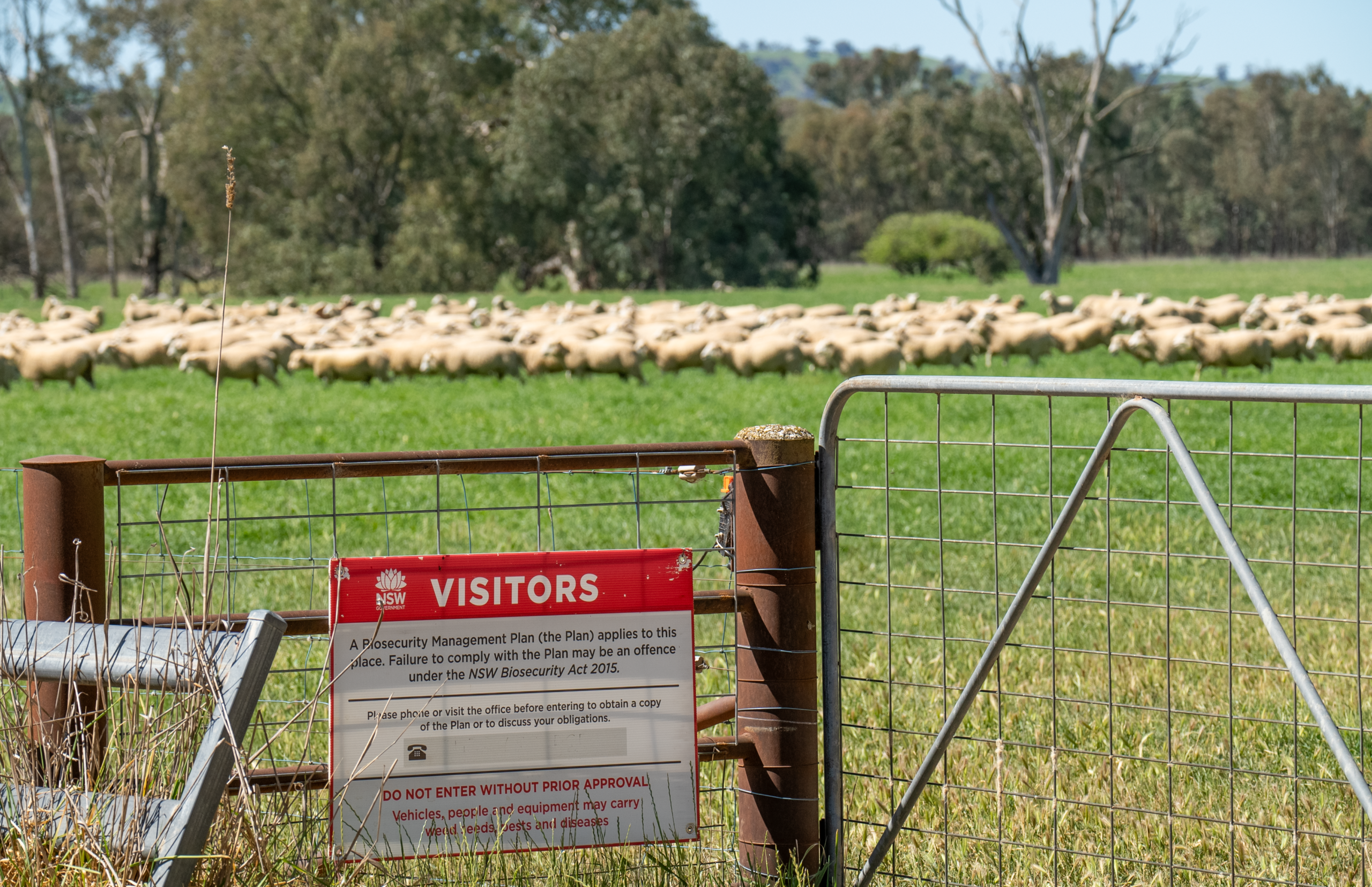
Quarantining is one of the most important biosecurity practices on your farm. When an unexpected infectious disease enters your herd or flock, it’s usually introduced through newly purchased or agisted livestock.
Good biosecurity starts at the saleyard by requesting a health declaration when purchasing new stock. However, even animals with a sound health record can still pick up diseases and pests at the saleyard or during transport.
Quarantine is essential to stop these hitchhikers in their tracks. While it won’t always keep every disease or pest out, it can still significantly reduce their impact by limiting how far and how quickly they spread.
A designated quarantine paddock is the most effective way to isolate new arrivals. This provides a physical barrier that reduces the risk of pests and diseases spreading to your resident livestock.
Quarantine animals for at least three weeks but ideally four. During this time, monitor their health closely and investigate any abnormal signs. This period also provides an opportunity to test for high-risk diseases that may not be immediately detectable.
Quarantine paddocks can also be used to assess introduced fodder or grain, which can carry their own biosecurity risks.
Newly purchased livestock may look healthy but still carry costly diseases that are not yet visible. Quarantine provides a critical window for these conditions to develop and become apparent.
Footrot
Footrot is a highly contagious bacterial disease affecting sheep, goats and cattle. While disease onset is rapid in cattle, the causative bacteria that infects sheep and goats can take weeks to develop clinical signs. In warmer months it takes around 2 weeks, however this can be longer when conditions are dry or cool. During droughts, quarantine should extend until after at least three months of lush pasture growth, as this is necessary for the expression of footrot.
Quarantining is essential to prevent the spread of disease. During this period, thoroughly inspect feet for lameness, inflammation or separation of the hoof. Sanitise your boots when you leave the quarantine paddock and ensure resident animals don’t walk the same ground as quarantined stock for at least seven days.
Lice
External parasites such as lice can take many months for infestation to become visible. Lice spread almost exclusively through direct animal contact, so isolation during quarantine is highly effective at stopping their introduction.
Monitor for flaking skin, itching or rubbing behaviours, and visible lice or eggs on wool/hair.
Some serious livestock diseases show no obvious signs but can have long-term impacts on productivity and profitability. If you’re unsure about the history of introduced animals, then a ‘test-and-hold’ strategy during quarantine helps to reduce this risk.
Diseases to consider testing for include:
Many purchased animals carry worm populations resistant to common treatments. A quarantine drench helps prevent resistant worms from being introduced onto your property.
An effective quarantine drench combines at least four unrelated drench groups (chemical actives). Always consult your veterinarian to develop a safe quarantine drenching strategy specific to your region.
Administer the quarantine drench to new stock when they arrive on your property. After drenching, hold animals in quarantine for one to three days (one day if feed is green high quality, three days if it is dry low quality) to allow any worm eggs in the gut to pass through.
Animals should be relocated to a paddock that has been recently grazed by resident stock as their worms will help dilute any resistant worms that survived the drench. Perform another WEC at 14 days post-drenching to ensure the drench was successful.
A well-managed quarantine approach combines manual inspection, quarantine drenches, and disease testing when the health history of new livestock is unclear.
These simple but powerful tools will protect your herd and ensure that new livestock add value to your business, not risk.